

Car auctions
Understand the auction before you bid.
Japanese auctions move fast and run to their own rules. Here is how a car gets listed, what the report tells you, how a bid instruction works and what the outcomes mean, so your first instruction is an informed one.
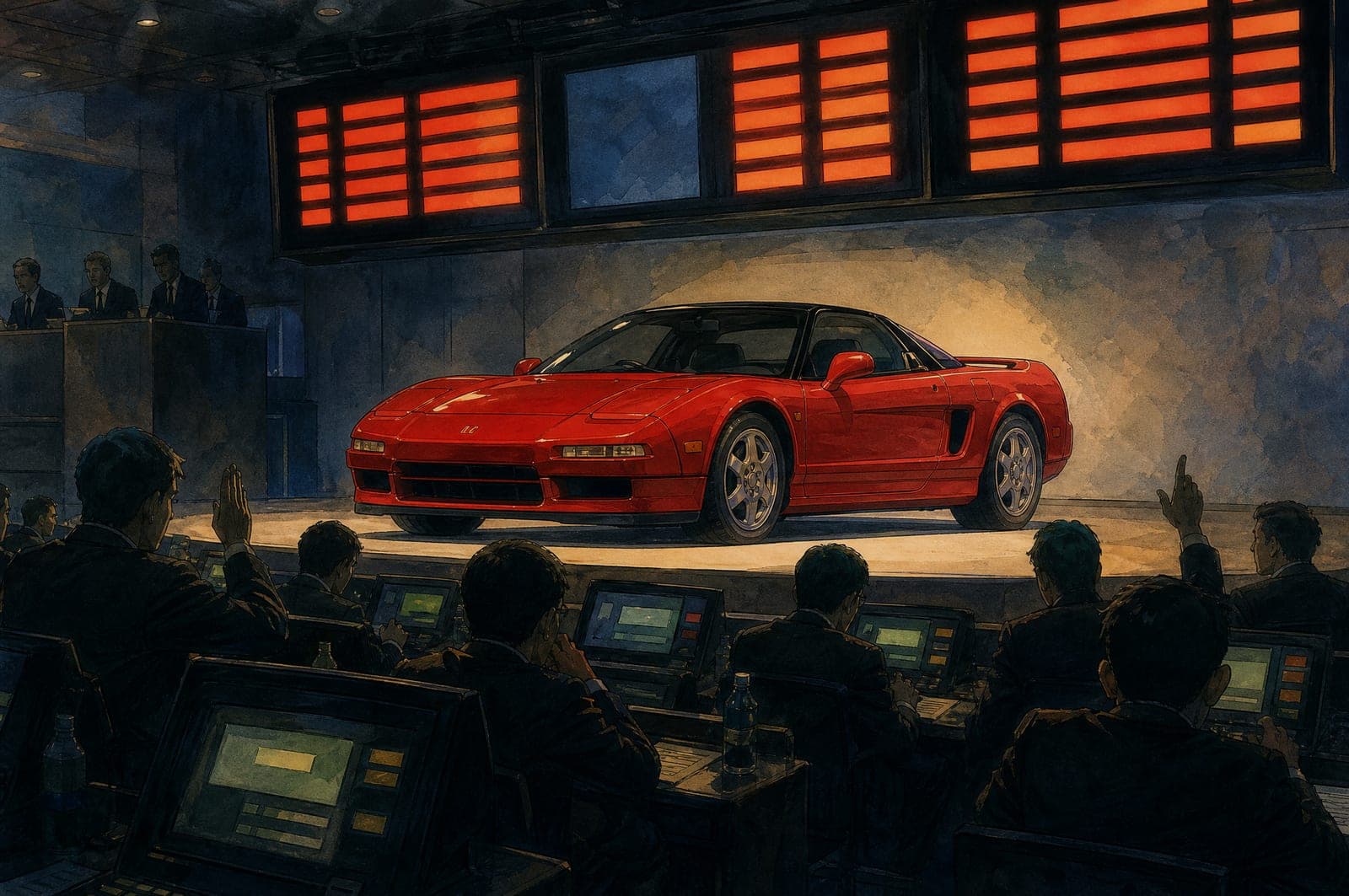
How a car is listed
Dealers, leasing companies and private sellers consign cars to member-only auction houses across Japan. Each house sells on fixed days of the week, and a car is usually listed a few days before its sale with a lot number, a starting price and the house’s own inspection report.
Overseas buyers see these listings through an access arrangement rather than directly. That is what Rindo Portal provides: the listings we can act on, searchable in one place, with Rindo on hand to look into any car you shortlist.
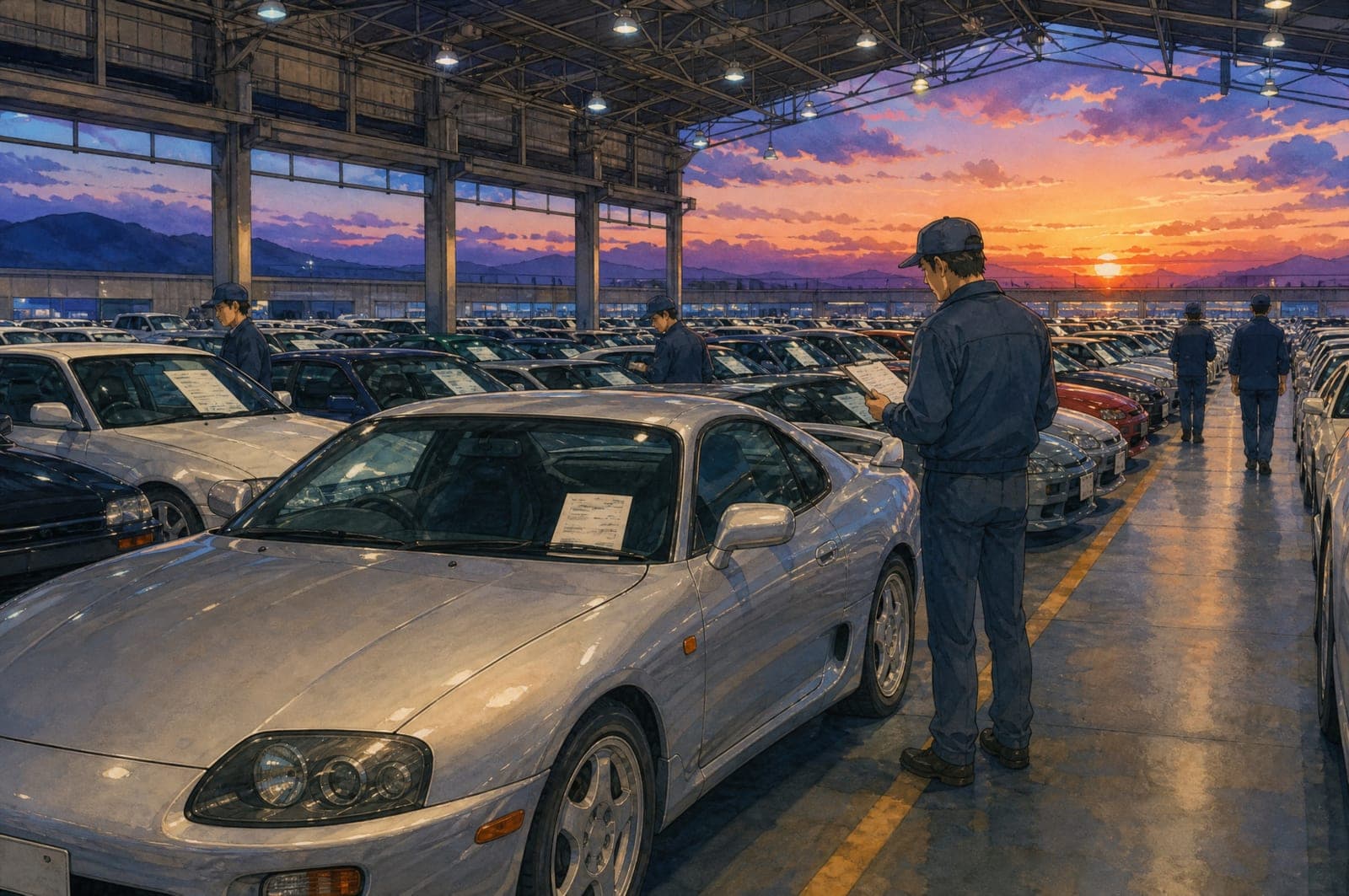
Find a car
The listings, in one place
Search the auctions Rindo can access, save a shortlist and ask us about any car before you decide.
Explore Rindo Portal →Reports, photographs and grades
The auction house gives you a standard set of information. It is the starting point for every assessment, not the finish.
Auction report
The house’s inspector records a grade, the mileage shown, equipment and a damage diagram with notes. It is a quick, standardised check, not a full mechanical inspection.
Photographs
A set of exterior, interior and engine-bay photographs taken at the yard. Useful for the obvious; rarely enough for the detail that matters on an older or special car.
Grades and markings
An overall grade, separate interior and exterior scores and letter-and-number codes on the diagram. They are consistent enough to compare cars, not to judge one on its own.
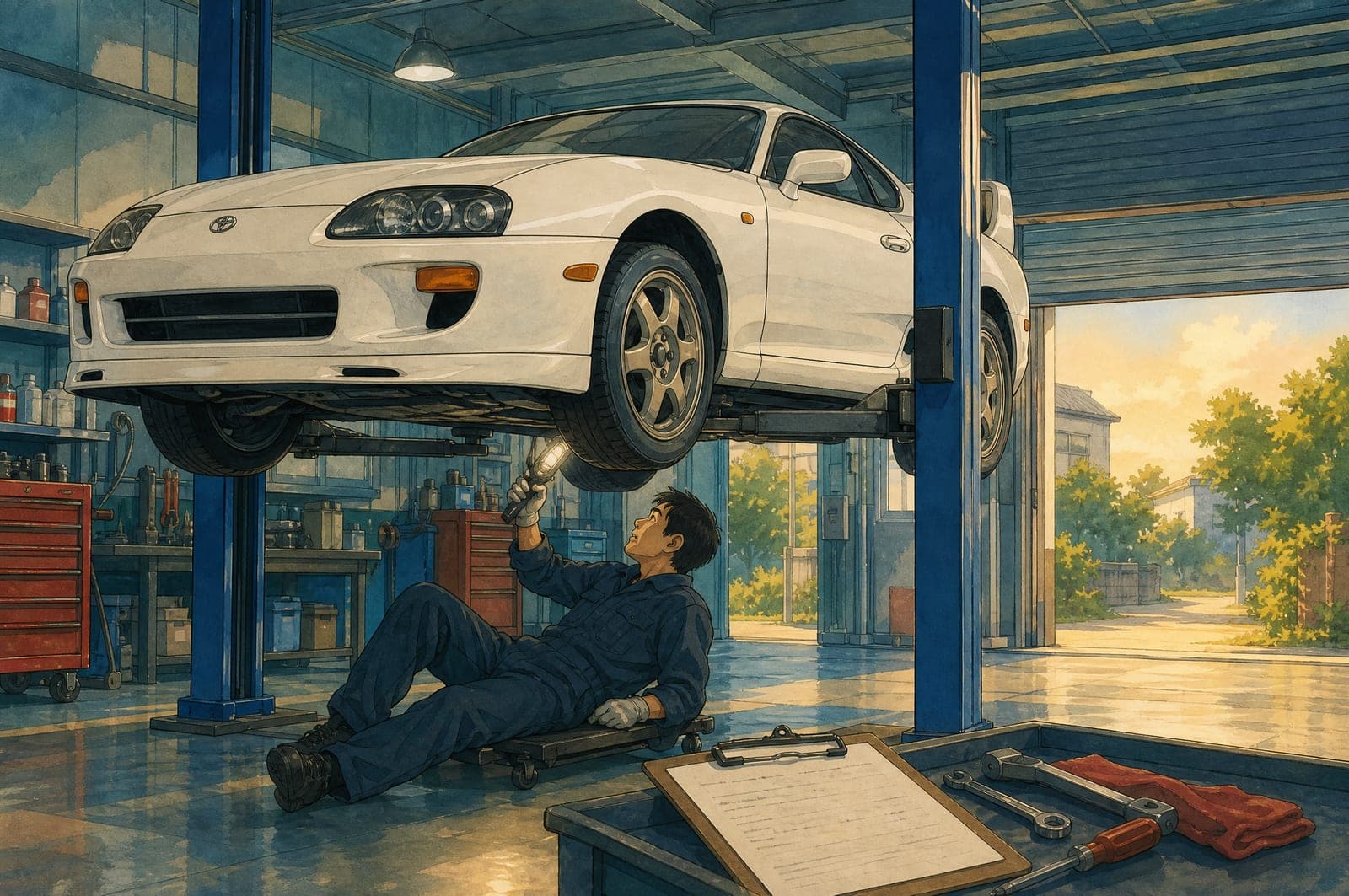
Why Rindo
Why condition needs a closer look
The inspector had minutes with the car. We take the time the report could not, and tell you what we found before you commit.
Our checks and inspections →The report is an opinion on the day
Auction inspectors work quickly and to the house’s own standards. They do not road test the car, put it on a lift or run diagnostics, and the grade reflects what they saw in the yard. Two cars with the same grade can be in very different condition underneath.
That gap is where Rindo earns its place. We read the full report and the photographs, ask the auction or seller the questions the sheet leaves open, and pursue further checks or a physical inspection where the auction allows it. The findings, and their limits, go to you in writing before you authorise a bid.
Timing and your bid instruction
The sale itself takes seconds. The preparation is where your decision is made.
Sale day, in Japan time
Each auction runs on its own fixed day, in Japan Standard Time. The listing shows the date and time; we confirm the deadline for your instruction, which falls before the sale.
Review with Rindo
Before the deadline we go through the report, our findings and a cost estimate to your port, so your ceiling is set on the whole picture.
Authorise in writing
You confirm the lot and the highest price you authorise. That instruction is submitted through Rindo; you never bid in an auction house’s system yourself.
The lot is sold
Bidding on each car is over in seconds. Your bid is placed up to, and never above, your authorised maximum. You hear the result the same day.
Maximum bid versus final purchase price
Your maximum is a ceiling, not a price. If bidding stops below it, you pay the hammer price at which the car sold, not your limit. If other bidders go past your ceiling, the bid stops and you do not buy the car.
The hammer price is also only the first line of the total. The auction house adds its own purchase fees, and then come Rindo’s charges, transport in Japan, export preparation, shipping and the costs at your destination. Our estimate sets these out before you decide your ceiling; Understanding Costs explains each line.
Illustration only
How a ceiling works
Figures are invented to show the mechanics. They are not a quote, a typical price or a prediction of any sale.
| Your authorised maximum | ¥1,500,000 |
| Bidding stops at | ¥1,320,000 |
| Hammer price you pay | ¥1,320,000 |
| Then added | Auction fees, Rindo charges, transport, export, shipping, destination costs |
Had another bidder gone to ¥1,520,000, the bid would have stopped at your ceiling and the car would have sold to them.
The three outcomes
Every instruction ends one of three ways. We tell you which on the day of the sale.
Won
Your bid was the highest and the car met the seller’s reserve. The hammer price becomes the vehicle price, and the purchase moves to payment through the Buying Process.
Not won
Another bidder went higher, or the bidding stopped below your ceiling but did not reach the reserve. Nothing is owed and you can go again on another car.
Unsold, with a possible negotiation
Some auctions allow an offer to the seller after the sale when a car has not sold. Where that applies, and only with your authority, we negotiate with the seller on your behalf.
What happens next
A win is the start of the managed part of the journey. The auction house invoices the car, payment is made within its deadline, and the car is collected for export preparation and shipping. The Buying Process page sets out each stage, who handles it and when payment is due.
Not won? Nothing is owed, your shortlist is still there, and the next sale is usually days away. Most customers bid more than once before the right car comes home.
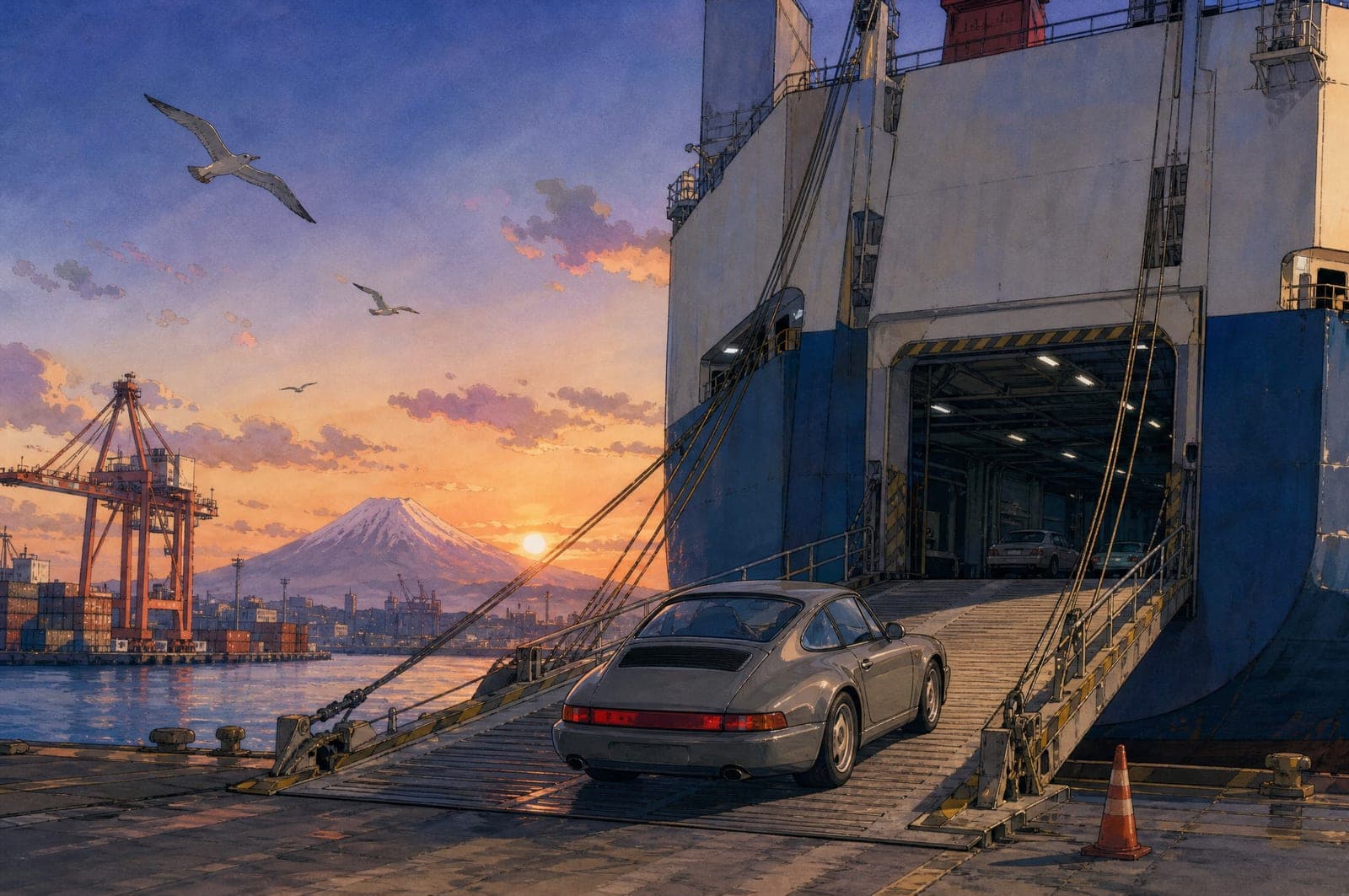
How to buy
The buying process
From free registration to the car on your drive: the stages in Japan, payment points and the destination stages for your country.
See the process →Ready to look at real listings?
Search the auctions in Rindo Portal, shortlist a car and ask us about it. Registration is free; a case-by-case deposit enables complete listings and bidding when you are ready.